Monitoring indicators of ecosystem health at Tyson Research Center and across the St. Louis metro region
Being based at WashU’s Tyson Research Center - a 2,000 acre, university-owned field station on the outskirts of St. Louis, MO - affords us the opportunity to monitor and contribute to improving ecosystem health in the region. We work closely with Beth Biro (Tyson Natural Resources Coordinator & Staff Scientist) and Erin O’Connell (Tyson Research Data Analyst) on the projects below, and we use data from these projects to inform land management strategies.
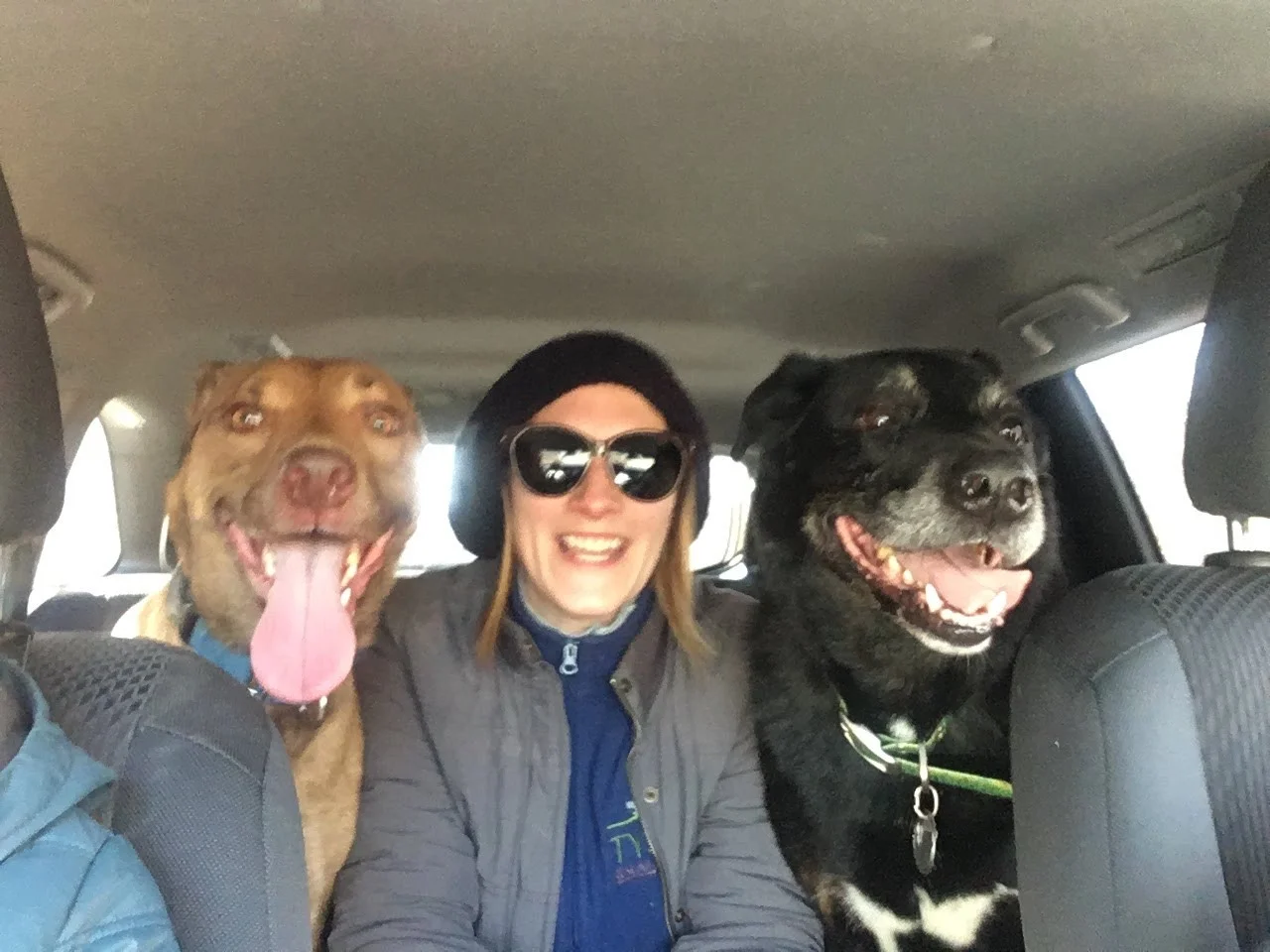
Beth biro, co-pi on ecological monitoring projects, shown here with canine field assistants Katla Adalsteinsson plazas and Rufus Biro

student members of the tyson conservation corps regularly help with these projects to gain hands-on training in applied conservation research.
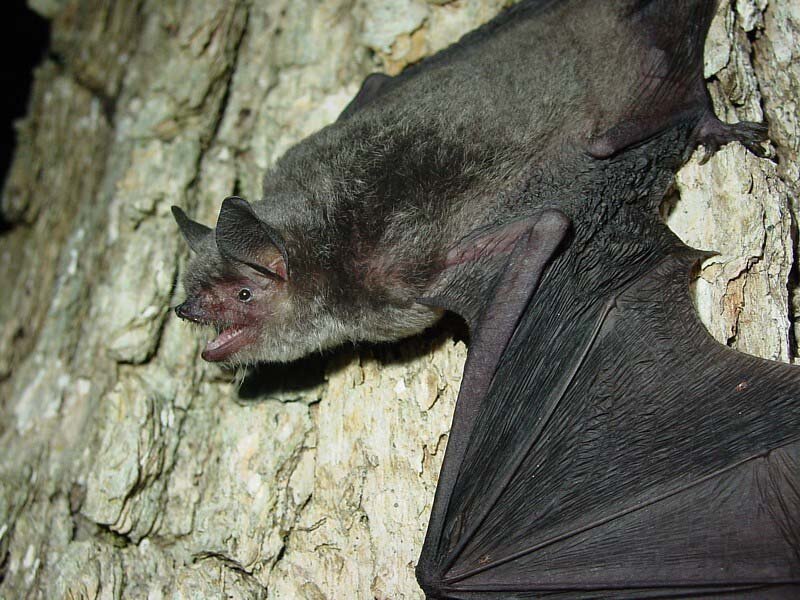
Gray Bat (Myotis grisescens), credit: adam mann
Threatened and endangered bat populations
Tyson Research Center has records of endangered bat species on its property since the late 1970s. In 2018, we began partnering with Vona Kuczynska (US Fish & Wildlife Service) and Shelly Colatskie (Missouri Department of Conservation) to survey bats in a variety of habitats across Tyson. We use a combination of passive acoustic monitoring, visual surveys, and mist-netting surveys to monitor how bat species are distributed around the property across different seasons. In the process we also serve as a testing ground to validate different types of bat monitoring devices and survey designs. Our long term goal is to guide restoration activities aimed at improving bat habitats and support the recovery of threatened and endangered species.
St. Louis Wildlife Project (Urban Wildlife Information Network)
The St. Louis Wildlife Project was established in 2018 in collaboration with Prof. Whitney Anthonysamy at the University of Health Sciences and Pharmacy. We use field cameras and passive acoustic monitors to collect data on mammal and bird populations in 40+ green spaces extending from downtown St. Louis out to rural areas north and west of the city. Through this project, St. Louis serves as a partner city in the Urban Wildlife Information Network, an initiative based at the Lincoln Park Zoo in Chicago, which is the first global network collecting urban wildlife data. The St. Louis Wildlife Project puts St. Louis on the cutting edge of urban wildlife research and its implications for sustainable urban planning and conservation of urban biodiversity.

Bobcat (lynx rufus) captured on a camera trap survey image

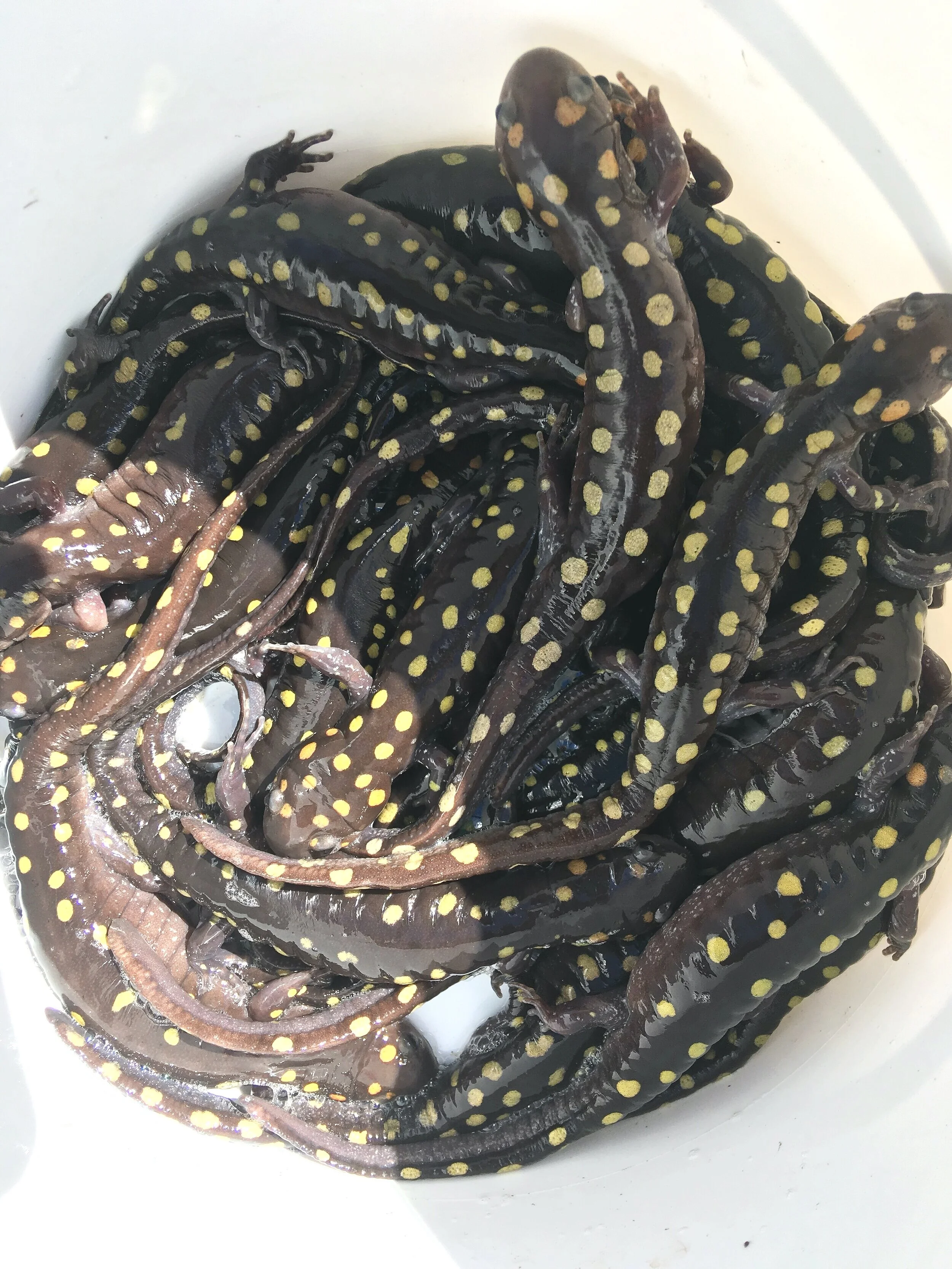
adult spotted salamander (ambystoma maculatum) at Tyson Research center
Amphibian diversity and abundance in artificial ponds
The spotted salamander (Ambystoma maculatum) is our flagship species at Tyson Research Center, owing to the foundational research on this species conducted by Dr. Owen Sexton, former Tyson Director and Professor of Biology at WashU. Each spring we monitor spotted salamander and wood frog reproduction and phenology in ponds around Tyson, and we contribute data to the Vernal Pool Phenology Project.

white-tailed deer photographed in annual fall population survey
White-tailed deer population at Tyson Research Center
Abundant white-tailed deer (Odocoileus virginianus) populations have pronounced impacts on local ecology, including altering soil characteristics, structuring vegetation communities, and promoting tick population growth. We collect data on our deer population to inform our management plans aimed at maintaining the ecological integrity of Tyson. This includes estimating deer density, demographics, and herbivory pressure annually.
